Showing posts with label poetry. Show all posts

Friday, October 5, 2012

Poem of the Week

Difference

The jellyfish
float in the bay shallows
like schools of clouds,

a dozen identical — is it right
to call them creatures,
these elaborate sacks

of nothing? All they seem
is shape, and shifting,
and though a whole troop

of undulant cousins
go about their business
within a single wave's span,

every one does something unlike:
this one a balloon
open on both ends

but swollen to its full expanse,
this one a breathing heart,
this a pulsing flower.

This one a rolled condom,
or a plastic purse swallowing itself,
that one a Tiffany shade,

this a troubled parasol.
This submarine opera's
all subterfuge and disguise,

its plot a fabulous tangle
of hiding and recognition:
nothing but trope,

nothing but something
forming itself into figures
then refiguring,

sheer ectoplasm
recognizable only as the stuff
of metaphor. What can words do

but link what we know
to what we don't,
and so form a shape?

Which shrinks or swells,
configures or collapses, blooms
even as it is described

into some unlikely
marine chiffon:
a gown for Isadora?

Nothing but style.
What binds
one shape to another

also sets them apart
— but what's lovelier
than the shapeshifting

transparence of like and as:
clear, undulant words?
We look at alien grace,

unfettered
by any determined form,
and we say: balloon, flower,

heart, condom, opera,
lampshade, parasol, ballet.
Hear how the mouth,

so full
of longing for the world,
changes its shape?

***

Since I wrote about a Mark Doty book earlier this week, I thought I'd put one of his poems up here, too.

The most prolific poets write, not because they have some dark emotional secrets that need to be let out into the dimly-lit corners of their closets. That's why teenagers write poetry. Poets write because they love their language, and they love their world. Doty's poem here reflects both of those loves simultaneously.


Friday, September 28, 2012

Poem of the Week

Genius
By Billy Collins

was what they called you in high school
if you tripped on a shoelace in the hall
and all your books went flying.

Or if you walked into an open locker door
you would be known as Einstein,
who imagined riding a streetcar into infinity.

Later, genius became someone
who could take a sliver of chalk and squire pi
a hundred places out beyond the decimal point,

or someone painting on his back on a scaffold,
or a man drawing a waterwheel in a margin,
or spinning out a little night music.

But earlier this week on a wooded path,
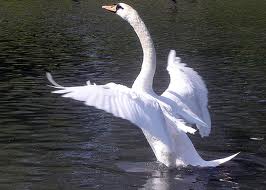
I thought the swans afloat on the reservoir
were the true geniuses,

the ones who had figured out how to fly,
how to be both beautiful and brutal,
and how to mate for life.

Twenty-four geniuses in all,
for I numbered them as Yeats had done,
deployed upon the calm, crystalline surface--

forty-eight if we count their still reflections,
or an even fifty if you want to toss in me
and the dog running up ahead,

who were smart enough to be out
that morning - she sniffing the ground,
me with my head up in the light morning breeze.

***

I don't really write poetry anymore, but back when I did I wanted to be Billy Collins. Of course I did. Everyone does.

There's something about the way Mr. Collins presents an everyday activity, like a leisurely walk, and imbues it with an almost sacred significance. The different uses of the term "genius" collide in an interesting fashion that calls into question the importance we sometimes place on our usual daily squabbles.


Friday, September 21, 2012

Poem of the Week

mr youse needn't be so spry
By E.E. Cummings

mr youse needn't be so spry
concernin questions arty

each has his tastes but as for i
i likes a certain party

gimme the he-man's solid bliss
youse ideas I'll match youse

a pretty girl who naked is
is worth a million statues

***

E.E. Cummings is a long-time favorite. His poetry influenced me more than any other single factor when I decided what career path (or "lack of career" path) I chose to pursue. His wordplay, though sometimes seemingly nonsensical, is always deliberate, thoughtful, and meaningful. I've spent many long hours analyzing his writing.

Of course,
some poems are little more than a screen behind which to hide a fancy rhyme and a filthy joke.

Friday, September 14, 2012

Poem of the Week

Hedgehog

The snail moves like a
Hovercraft, held up by a
Rubber cushion of itself,
Sharing its secret

With the hedgehog. The hedgehog
Shares its secret with no one.
We say, Hedgehog, come out
Of yourself and we will love you.

We mean no harm. We want
Only to listen to what
You have to say. We want
Your answers to our questions.

The hedgehog gives nothing
Away, keeping itself to itself.
We wonder what a hedgehog
Has to hide, why it so distrusts.

We forget the god
under this crown of thorns.
We forget that never again
will a god trust in the world.

***

I don't think you have to be Christian to grasp the effectiveness of Christian imagery - although I'm sure the impact is more profound if you are. Paul Muldoon equates nature with godliness, both forces that mankind has historically betrayed. He equates the "otherness" of natural forces to a divinity that we long to comprehend but have cut ourselves off from understanding. Impressive stuff.


And, on a completely unrelated note:

Thursday, August 16, 2012

Poem of the Week

Choose Something Like a Star
Robert Frost

O Star (the fairest one in sight),
We grant your loftiness the right
To some obscurity of cloud --
It will not do to say of night,
Since dark is what brings out your light.
Some mystery becomes the proud.
But to be wholly taciturn
In your reserve is not allowed.

Say something to us we can learn
By heart and when alone repeat.
Say something! And it says "I burn."
But say with what degree of heat.
Talk Fahrenheit, talk Centigrade.
Use language we can comprehend.
Tell us what elements you blend.

It gives us strangely little aid,
But does tell something in the end.
And steadfast as Keats' Eremite,
Not even stooping from its sphere,
It asks a little of us here.
It asks of us a certain height,
So when at times the mob is swayed
To carry praise or blame too far,
We may choose something like a star
To stay our minds on and be staid.

***

While I like a lot of poetry, I tend to find religious poetry a bit too maudlin for my taste. I prefer poetry that touches on a religious subject without being too preachy or sentimental. Frost's "Choose Something Like a Star" is a long-time favorite of mine - it embodies both the frustration of religious experience as well as the comfort that can come from placing your faith in something higher than yourself.

Plus, I sang an arrangement of it back in junior high that was so beautiful that it got me hooked on singing to this day.


Friday, August 10, 2012

Poem of the Week

My NEA Poem
William Stafford

A blank place on the page,
like this here "------,"
means, oh it means,
you know, but not said.

And it's better when you come to these
"------"s again
to leave blank places.

But some people
get a grant
and want to show
artistic freedom;

So all they say is,
"------,"
"------,"
and "------."

***

I'm all for freedom of speech, and I really hate censorship. That said, just because you have the right to fill your stuff with smut doesn't mean smut's the strongest choice. Thanks for pointing that out, Mr. Stafford.

Friday, August 3, 2012

Poem of the Week

Goodtime Jesus
James Tate

Jesus got up one day a little later than usual. He had been dreaming so deep there was nothing left in his head. What was it? A nightmare, dead bodies walking all around him, eyes rolled back, skin falling off. But he wasn’t afraid of that. It was a beautiful day. How ’bout some coffee? Don’t mind if I do. Take a little ride on my donkey, I love that donkey. Hell, I love everybody.
 
***
 
First day of my Advanced Poetry Writing class back in college, Professor Michael Sowder gets up and reads this poem.  He's got a laid-back attitude and a voice sleepy with contentment - like most good poets do.  His face breaks out in this delighted little smile when he reads the line, "Hell, I love everybody."  Then he puts the book down, looks around at the class and says, "Isn't that nice?"
 

Yes, Mr. Sowder.  It's VERY nice.

Friday, July 27, 2012

Poem of the Week

Thanks for the Garlic
by Alice Walker

Thanks for the garlic,
I think I'm going
To plant
It now

Not wait
for spring.

The bulbs are
So fresh
And white
Their skins
So tight.

I love it
That you did
Not want to send
Them in anything
That would
Crush
Them. Though
Crushing is likely surely
to be
their offsprings
Fate.

That you waited
to find the perfect
Box.

Do you understand
how like you
This is?


There they sit
A smartly demure
Row
On the counter
Near the door
That leads
To the beginning
Of their future
lives;
Fiery at heart,
you say.

Your hardy
Garlic
Souls
Unrepented
of their inner
Flame
Serenely
Awaiting
My gardener's
Pleasure
of time
And Place

Unabashed
By whatever's
to come

Cool

As nuns.

***


A great poem. One of my favorites, actually. Ms. Walker employs clear, unique metaphors to describe the garlic - "fiery souls," "cool as nuns" - evoke a powerful image of these tiny bulbs. The poet's gratitude is abundantly clear. "Thanks for the Garlic" just reminds me to be grateful for the little things as much as the big ones.

Thursday, July 26, 2012

You Build Up My Senses


Once upon a time, I had the delicate, expressive soul of a poet. I wrote, read, and sometimes even bathed in poetry. I've since given the practice up, since poetry baths tend to leave one smelling like wet corduroy in the worst way. However, even though I've sold my poetic soul for Batman Legos, I still have a love for the subject. A nostalgic love, perhaps, but a love nonetheless.

The other day I had a good long sit down with a friend who came to me for writing advice. She meets with a tutor, who instructed her to include good sensory detail in her writing. Turns out (to the surprise of no one but me), I had opinions to share on the subject.

Sensory detail, to me, serves a very distinct purpose. Good sensory detail - by which I mean descriptions of the scenery through any of the senses - does not just to create a mental image in the reader's mind, but evokes an emotion. The same fact can be used to evoke several different emotions. For example, a warm room can be described by saying "The heat pressed down on his shoulders, forcing him deeper and deeper into the sofa," and that feels completely different from saying, "Sweat ran down the side of his face like his mother's carressing finger." Both denote heat, but both evoke different emotions.

I advised my friend to read poetry to help her get an understanding for sensory detail. After all, poets are brilliant at that sort of thing. Sadly, though, I'd realized that it had been a long, long time since I had made poetry an active part of my life.

So I've got a book of poetry in my bag right now (Michael Ondaatje's The Cinnamon Peeler, if anyone's interested), and I think I'll be posting more poetry on the blog here. Not original stuff - I haven't written a poem since... September, I think - but just good poetry that I've come across that makes me feel better about things and such.

That's my way with words. I'm, like, really good with words.

Tuesday, May 1, 2012

The Hippopotamus and the Meaning of Life: An Improvised Poem


The morning sun rises on the Serengeti

And the tall grasses wave just like spaghetti.

The animals stir from their sleep in the marshes
And shake off the dew from their ears and their arshes.

First and foremost is the great hippopotamus...

...who dies at sundown.

Last weekend during the Jesters Royale show, we played a game called Poetry Slam, wherein the players all make up a poem based on an audience suggestion.  The audience suggested "hippopotamus."

Turns out no one knew how to rhyme with "hippopotamus."  Coulda used some help from Bret and Jemaine.

Monday, April 30, 2012

Braddy Reads Set to Sea


Oh, man!  It's been National Poetry Month ALL MONTH and I haven't done anything to commemorate it.

...Wait, it's still April?  Okay, good, then I've got time to do some poetry appreciation.

So I'ma review a comic book, mmmkay?

Drew Weing's Set to Sea is a book I've encountered before.  Earlier this month, I found the book in a catalogue and decided to pick it up again.  And... well... it's really good.

No, like, REALLY good.

Set to Sea is the story of a poet who has fallen on hard financial times... probably because he's a poet.  He's got no money, he's got no credit, and he's... well, kind of a bum.  He's busy working on his next poetry a book full of nautical themed poems, but the writing's not getting him anywhere.  Then he gets pressganged.

The central theme of the book seems to be about how important it is for a poet/writer to experience life.  Ironically, the poet is only successful at writing poetry when he no longer NEEDS the income from poetry.  On the surface, the theme seems an obvious one:  OF COURSE the poet can't write a good poem about the sea until he actually goes out on the ocean.  That just makes sense!

The truth is, though, that's the type of message that most writers/artists need to hear.  Writing, even when it becomes an occupation, can't be the central aspect of a person's life.  If it does, then what else will they write about?

Set to Sea may very well be on my list of best comics of all time now.  It's a quick read - about ten or fifteen minutes - and it's beautifully illustrated.  Also, Set to Sea is a thought provoking and surprisingly serene book (except for one pretty violent sequence in the middle when our poet's ship gets attacked by pirates).  Well worth the read.

Friday, January 6, 2012

Wish I Said it First #16

#16

"'I wonder who first discovered the efficacy of poetry in driving away love!' [said Elizabeth.]

'I have been used to consider poetry as the food of love,' said Darcy.

'Of a fine, stout, healthy love it may. Everything nourishes what is strong already. But if it be only a slight, thin sort of inclination, I am convinced that one good sonnet will starve it entirely away.'"

- Jane Austen, Pride and Prejudice

Thursday, March 31, 2011

Where Have All the Poets Gone?


With National Poetry Month looming large over the calendar, it seemed like an appropriate time to pick up a couple of my old favorite books. It's been a while since I've really dabbled in poetry - at least six months since I actually WROTE anything. Returning to the art felt... refreshing, in a way, and nearly spiritual.

When I look at the state of contemporary poetry in the United States, I tend to get a bit sad. From my perspective, the art form is suffering from a terminal illness - there just don't seem to be as many people involved in poetry anymore. My perception's definitely been influence by my (now lapsed) membership in the Utah State Poetry Society, where I was the only straight male under the age of 40. Poets - at least, those individuals that write short verse with a strong, sincere respect towards the power their language has - seem to be a dying breed.

The most popular peddlers of verse seem to be hack songwriters crowding up the radio, who seem to have forgotten how to REVERENCE something with language. For example, anyone who tuned in to this year's Superbowl halftime show almost definitely got an earful of Usher's "OMG," which includes this jaw-droppingly tasteless couplet:

"Honey got a booty like pow, pow, pow
Honey got some boobies like wow, oh wow"

Seriously, what happened to artistry? What happened to good taste? Heck, even the Elizabethans knew how to treat women with respect. I mean, here's a verse from one of my favorite old English poets, Edward Spenser:

"Her goodly bosome lyke a Strawberry bed,
her neck lyke to a bounch of Cullambynes;
her brest lyke lillyes, ere theyr leaves be shed,
her nipples lyke yong blossom'd Jessemynes..."

...

Umm... That was more... explicit... than I remember it being.

Sorry about that. It's been a while since I really dabbled in poetry this old. I forgot about the "blazon poem," which categorically analyzes and idealizes every single part of a woman's body. It was... pretty popular back then.

But back to Usher: the man has a serious problem with control. In another of his recent hits, "Love in this Club," Usher expresses to the woman of his attention (I almost said affection, but that didn't feel right) that he really wants to have sex with her RIGHT NOW, modesty be damned.

Romantic sentiment used to be more RESTRAINED. Contrast Usher's music with, say, another prominent English poet: Andrew Marvell. Here's one of Marvell's most famous pieces, "To His Coy Mistress":

"Let us roll all our strength and all
Our sweetness up into one ball,
And tear our pleasures with rough strife
Through the iron gates of life:
Thus, though we cannot make our sun
Stand still, yet we will make him run."

Wait, that poem... is basically saying the exact same thing.

Okay folks, you heard it here first:


Usher Raymond is, in fact, the current Master of Poetry, building his songwriting empire on a foundation of centuries of poetic precedent.

Wednesday, September 29, 2010

More Poems Posted

A couple weeks ago, I started keeping all my poetry drafts in a big, three-ring binder. After losing electronic copies of things so frequently, I figured, surely, this would be the best way to keep all my poetry drafts in order. After all, a binder would fit nicely into the messenger bag I keep with me all the time, so I'll never lose it, right?

Well, unless I lose the whole bag.

Bag's recovered - all is in order. Oh, and I've posted more poems over at http://braddypoetry.blogspot.com/. I could still use more feedback on any of the poems I've written up there. It's a private blog, but you're more than welcome to request permission if you've got a Google account.

Wednesday, September 8, 2010

Opening a New Blog

Given all the troubles I've been having with keeping my poetry drafts on file, I've decided to start keeping them online at a new blog:

http://braddypoetry.blogspot.com

The reasoning here is that I can keep the drafts hidden from the general public (thus allowing me to publish them later) while still letting interested individuals take a look at what I've written - and hopefully offer some constructive criticism, that much coveted berry from the bush of distinguished internet readership.

Anyway, so the blog is private, but I'd be more than happy to let any of y'all in for a gander. Just drop me a line and let me know.

Thursday, August 19, 2010

Storytelling: Poetry

The past two years or so I've spent a LOT of time thinking about the modern art of storytelling - basically, who tells stories and how they tell them. We've never had more ways of getting stories out there than we do right now. Most of my thoughts have focused on WHY a story should be told a certain way. Here are some of the conclusions I've come to.


We'll start with one of my personal favorites:


POETRY


In some ways, poetry's one of the oldest forms of storytelling/artistic expression we've got. Rhyming verse has its roots in old oral storytelling traditions - it's easy to memorize and easy to recite.

In recent years, poetry's been less about rhyme and meter and more about raw, verbal imagery. It's the clever turn of phrase, the subtle metaphor that rests over you like a blanket or stirs you up to action. Rhymes are still a part of poetry, but they more often find their place in children's poetry anymore.

Formal experimentation has always been a big part of poetry writing, but the forms have gotten even more diverse over the last 100 years. Just about anything goes - making pictures out of words, changing fonts and colors, stream-of-consciousness free-association... anything goes.

Poetry's greatest strengths are its versatility and relative simplicity. True, you CAN write a 300-page epic poem, but, usually, 300 LINES is considered a long poem. Poems can be written on ANY subject, from the mundane to the sublime, from the profane to the divine. Good poetry merits revisitation, doesn't demand a lot of time, and leaves you feeling NEW.

Poetry's biggest problem, though, is in it's inaccessibility. People don't GET poetry anymore, because poetry's not written for the people as a whole. It's incredibly esoteric - just because a poem CAN be simple doesn't mean it will. "Good" poetry has long been dominated by academics, who spend more time in self-congratulation that they forget the poem's original audience: the small group gathered around the fireplace.

The lack of fireplaces in our nation may also contribute to poetry's decline.


Joking aside, I really believe poetry IS in decline. With the advent of the movie, the TV series, and countless other media that are easily accessible and easily understandable, poetry may be on its way out. But just because poetry's no longer culturally relevant doesn't make it any less worthwhile as a course of study. People may not be able to name any poets from the past ten years, but EVERYONE knows how to finish the couplet, "Two roads diverged in a wood, and I." Poetry's important historically, and, therefore, will always maintain SOME level of relevancy.


Besides, poetry's sneaky. A person who would never buy a book of poetry may pick up a novel with some particularly vivid description, or watch a movie with one or two striking lines of dialog, or pick up the latest Eminem album and hear a fantastic rhyme (Anyone who can rhyme "tornado," "volcano," and "away now" is a genius in my book). Even undercover, poetry will always be around.

So you want to tell a story. Why write a poem?

  • Strong, economic language - poetry's perfect for people who love their language.
  • Lots of possibility for experimentation.
  • Very small, but incredibly enthusiastic, audience.
  • Lots of application outside of the field of poetry.

Wednesday, August 4, 2010

uBeR pOeTrY kOnTeSt 4 tEh KiDz!!!1!

Yeah, I have no clue how to properly write in 1337.


Before I get into my rant for the day, I want clear something up. I made a comment the other day that rather strongly implied that I'd given up on poetry writing. I'll own to being a bit discouraged, but I don't think I've actually QUIT. After the setbacks I've had, I feel like I just need a bit of time to recuperate* Also, remember that, in the past, I have threatened to quit the dating scene, my job, all video games ever, my crippling cocaine addiction, and using the word "shizzle," and I haven't actually given up on any of these things.


Well, except dating.


Anyway, so I belong to a poetry group made up mostly of middle-aged women (and one gay man) (that's not me). The group leadership has decided that they need to attract younger members - presumably so this herd of poetic wildebeasts will survive after the next lion attack (metaphorically - that wasn't meant to be an agist joke). To that end, they've decided to create a poetry contest, and they're currently debating what type of contest they can have that'll attract the young 'uns. Here's what they've come up with:


Write a poem on the subject of science and technology (eg, space shuttles, cosmology, use of computers such as finding information on the Internet and connecting with others via social networks such as Facebook and Twitter)


Now, I'm all for expanding the circle of poetry writers in the community, seeing as how I'm a three-legged poetic wildebeast with skin cancer and asthma myself, but I'm not sure how effective this contest will be at attracting young people. It seems too much like an attempt to capitalize on what's "hip" rather than what's relevant and comes from the very generational disconnect their trying to work around.


"Them whippersnappers got no respect for the art of their elders! They'ze too busy with their Facebooks and cellular tellyphones to pay us any attention! We gots ta get them ta appreciate poetry soon, or they'll all be lost when the Rapture comes!"


"Maybe we could invite them to participate in a poetry contest?"


"Naw, only if they write about that darnfangled Internet thing. They don't know nothin' bout nothin' else."**


That said, I don't know what they could do that would work any better. I don't think I'm being overly pessimistic when I say poetry is a dying art form. To me, it's significant that even big bookstores like Barnes and Noble are constantly putting their poetry sections on smaller and smaller bookshelves more difficult to locate than the section on midget pornography.

(Although I have to say that this idea for a contest reminded me of an idea my cousin JC told me about: text poetry. I like the idea of writing micro-poetry that can be sent via text, but I'm afraid too many rhymes would be made with the word "lulz")

My biggest fear is that people just don't see poetry as relevant anymore - and it may not be, at least in any form currently existing. Traditional poetry's a bit too esoteric for the general public - if not by design, then by history. Now, if you could get Angelina Jolie to make a movie based on the life of Sylvia Plath, maybe we could reverse that.

You know you'd watch that. I would.


* i.e. curl up in a ball behind my bed with my thumb in my mouth.

** Celebrity voices impersonated

Monday, August 2, 2010

Braddy Reads Absolute Trust in the Goodness of the Earth

So I’ve had a lot of setbacks when it comes to my poetry writing recently. I lost my USB drive with all my poetry on it for the second time in two years. Oh, and you couple that with the fact that the poetry section at Barnes and Noble keeps getting moved to smaller and smaller bookshelves (assuming they still have a section dedicated to poetry AT ALL), and my enthusiasm for the art has nearly completely disappeared – despite the fact that I GRADUATED from college in poetry writing.

I hope I never lose my enthusiasm for READING the stuff, though – cuz then I’d miss out on some pretty good poetry. Take, for example, Absolute Trust in the Goodness of the Earth, by Alice Walker.

There are some fantastic poems in here that revel in simple language and everyday settings. Alice Walker pulls out a lot of themes involving aging and acceptance, and she pulls some pretty fantastic word pairings out.

Seriously, the woman has a line about war not paying attention to frogs, and she calls garlic “cool as nuns.” This, by the way, is Awesome Poetry™.

There are some aspects of Alice Walker’s poetry that I had a bit of trouble wrapping my head around. Ms. Walker dedicates a lot of time talking about the importance of using mushrooms to tap in to the divine. I don’t know that I can really get behind that… but it feels appropriately poetish.

Oh, and she writes a lot about a kind of “divine femininity” that I, as a male reader, have trouble getting behind. I mean, there’s a lot of talk about “divine femininity,” but I never hear anything about a “divine masculinity.”

I bet the divine masculinity just belches a lot.

Anyway, Absolute Trust in the Goodness of the Earth – recommended for anyone who happens to like poetry.

Tuesday, May 25, 2010

Wish I Said it First #10

#10

"Your eyes are like blueberries, sweet and jucy. Will you marry me? Check yes or no."

- Darian Oliphant, during a Jesters Royale scene about poetry.

Man, I WISH I wrote poetry that good!

Giant-Sized Daily Sketches

My new sketchbook's a heckuvalot bigger than my old one, which I find gives me a lot more room to experiment. I take more space drawing people, or I build a scene slowly over a couple of days. It's been rewarding thus far.


5.15.10 - One of the reasons I've been trying to learn to draw is so I can adapt some of my poetry to art. I've had this idea for a little while, pretty much ever since I first picked up the Flight series of graphic novels (which are awesome, by the way, and you should check them out from your local library NOW).

I didn't really do a whole lot of "poety" drawing in this picture - it's more just the setting. And it's not even a particularly GOOD example of the setting. The piano, of course, is completely out of proportion to the rest of the scene.

Another discrepancy: the woman who actually sang when I felt inspired to write the poem was a lot smaller than this. But I think I'm happy with what I've drawn.

To give you an idea of where I hope to go with the whole drawing thing, here's the original poem that inspired this sketch:

UN BEL DI, VEDREMO

she sings, cradled in the arm of the piano,
an ironwork of gulls hanging just over
her head, wings spread as though in flight.
If I close my eyes, I see

a long, thin sash of clouds draped over
the neck of the sky, mirrored in
the water below. There she stands by the sea,
and the white birds wing about and cry.

When I open my eyes, I see her eyes deeper
than I can imagine them – she watches the back wall
as if it were a horizon. The iron gulls
fly forever, always coming

but never arriving. If freed from their welding
at this moment, they could fly to the clear,
clean glass windows and break through,
wing off into the air, ride on the backs

of wind currents and come to rest in exotic
locations all over the world. They could send postcards
from Auckland, Tokyo, Calcutta. But if
they are like me, they would rather

alight on the sofa where I sit, or the backs of
dining-room chairs, and listen as the girl’s song hangs
like wisps of cloud drifting towards those sails
just now coming to this side of the horizon.


And here's a bonus:

5.22.10-5.24.10 - Here's just a goofy character sketch I did a coupla three times. Each time, I tried to make the character a bit more "crazed" in appearance.

I had meant to make the third little guy there just hunched up on himself. I should have drawn the shoulders up higher towards his ears; that way, he wouldn't look like a little boy. Although, I have to say, I think I actually LIKE him as a little boy more.

Oh, and the hair here? TONS of fun to draw.